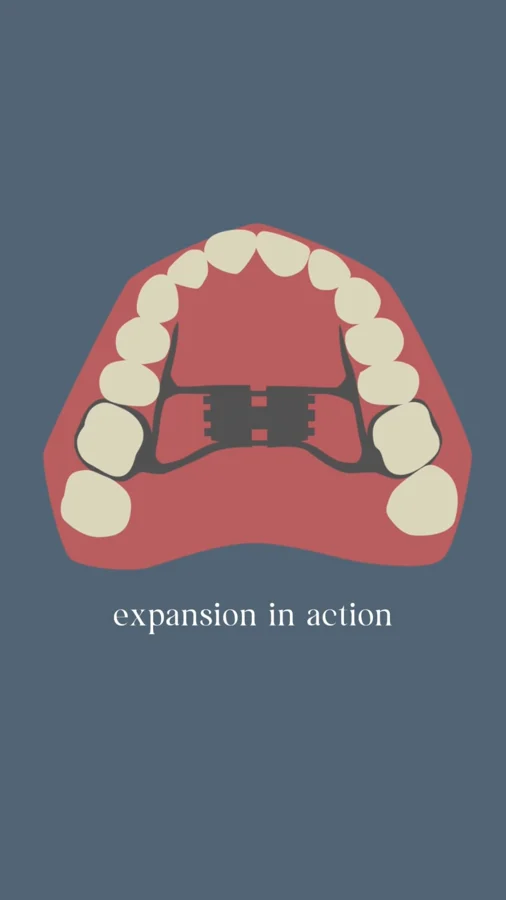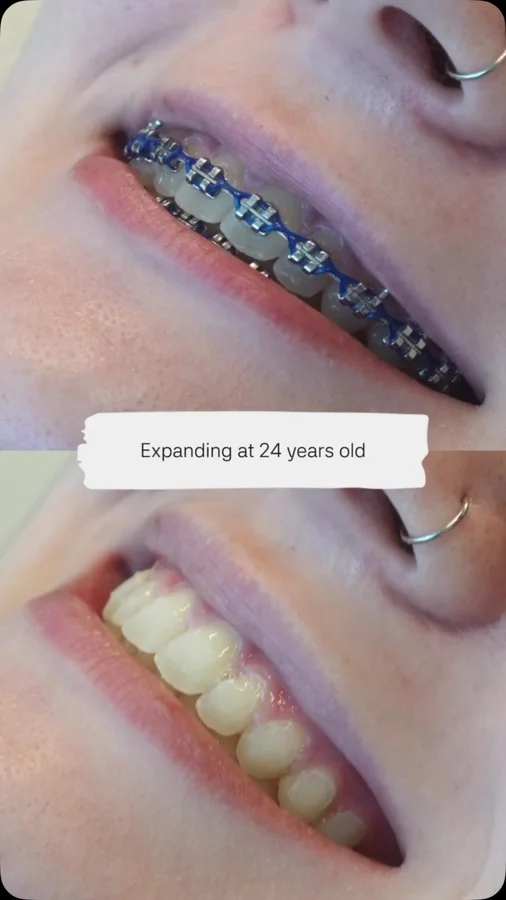
Start with the reason for more treatment
The post raises a question many families understandably find frustrating: why would another expander be recommended after a child has already worn one? Its caption describes a situation in which the first phase did not achieve sufficient expansion. That is a possible explanation for additional treatment, but the reason in any individual case needs to be demonstrated from current findings and earlier records.
Ask the clinician to distinguish the original goal from today's recommendation. Was the earlier phase completed as planned? Is the present concern the same one or a different issue? A clear explanation should make the recommendation understandable without requiring the family to interpret technical measurements alone.
Expansion and retention answer different questions
Active treatment concerns the change an appliance is intended to produce. Retention concerns maintaining a result after active change. The caption discusses both, which is a useful reminder to ask about the whole sequence when treatment begins, including what happens after the active phase ends.
Rather than seeking one universal retention schedule, ask for the schedule selected for this patient and the reasons behind it. Clarify which appliance remains in place, when reviews occur, and what findings would lead the clinician to adjust the plan. Written instructions help families distinguish planned observation from an appointment that has simply been missed.
An endpoint should be specific to the patient
The caption also mentions overexpansion as part of some treatment plans. That term should prompt an explanation from the treating orthodontist, not an instruction to activate an appliance further at home. Ask what the clinician means by the term in this case and which examination findings determine when activation stops.
AAPD guidance supports using diagnostic information to set treatment priorities and timing. Applied to this conversation, the practical question is what remains to be corrected and how the team will recognize that the planned goal has been met. The number of appliances alone cannot answer whether the plan is appropriate or complete.
Make the next decision with the full record
If another phase is proposed, request a comparison of the relevant records and a written outline of the purpose, expected sequence, and follow-up. If breathing is also a concern, ask how that concern will be assessed separately from dental width. A recommendation for more expansion should not be treated as proof that an airway symptom will resolve.
A second opinion can be easier to interpret when the reviewing clinician has the original treatment goals and available records. The aim is an informed next decision: understand the current finding, the proposed change, the alternatives, and the plan for maintaining and evaluating the result.
A second expansion phase requires a new diagnostic comparison
A previous expander does not, by itself, explain why another appliance might be proposed. The first question is whether the current concern represents residual transverse discrepancy, recurrence of a corrected relationship, a new developmental issue, or a planned stage in a longer treatment sequence. Those possibilities imply different interpretations of the earlier treatment and different goals for the next phase.
A useful comparison includes the original diagnosis, appliance type, pretreatment and post-treatment records, retention history, and current dentition stage. The clinician should distinguish a change in molar position from a change in skeletal width and identify whether the arches remain compatible in the current occlusion. Without those records, a social post cannot establish that the first treatment failed or that repeat expansion is the necessary solution.
Sources: [1]
Define the additional benefit and the outcome that will verify it
Before a second phase, the treatment rationale should state what clinically important discrepancy remains and how the proposed intervention addresses it. That rationale is stronger than a general goal of “more space.” It should also explain what stabilization, alignment, and follow-up will be required after the additional correction, and whether alternative strategies could address the same problem.
Any airway-related objective requires its own baseline. A repeat expander should not be selected solely because a child continues to snore after orthodontic treatment. Persistent symptoms can reflect contributors outside the transverse maxillary dimension and require appropriate medical assessment. Likewise, an increase in arch width during a second phase would establish a dental change, not automatically a sleep outcome. Reviewing earlier records and defining separate endpoints makes the decision more transparent and supports a reasoned discussion of expected benefit and limitations.
Bring the conversation to your visit.
- What specific finding makes additional expansion necessary now?
- What is the endpoint for active treatment and the plan for retention?
- How does the current recommendation compare with the original treatment goals?
Supporting studies & resources
These resources add clinical context to the original post. Each publication should be read with its study population, methods, and outcomes in mind.
- Management of the Developing Dentition and Occlusion in Pediatric Dentistry American Academy of Pediatric Dentistry · 2024 · Clinical best practice
- Polygraphic evaluation of the effects of different rapid maxillary expansion appliances on sleep quality: A randomized clinical trial Gokce et al. · Sleep and Breathing · 2023 · Randomized trial