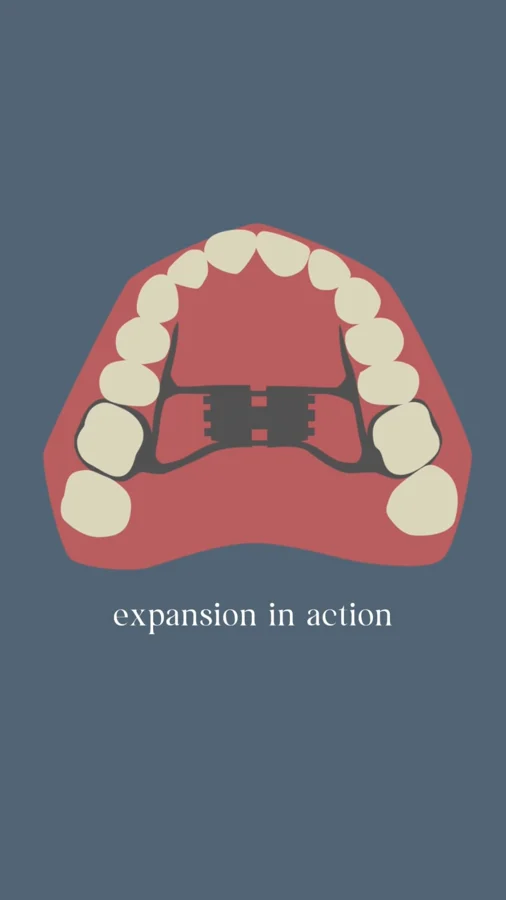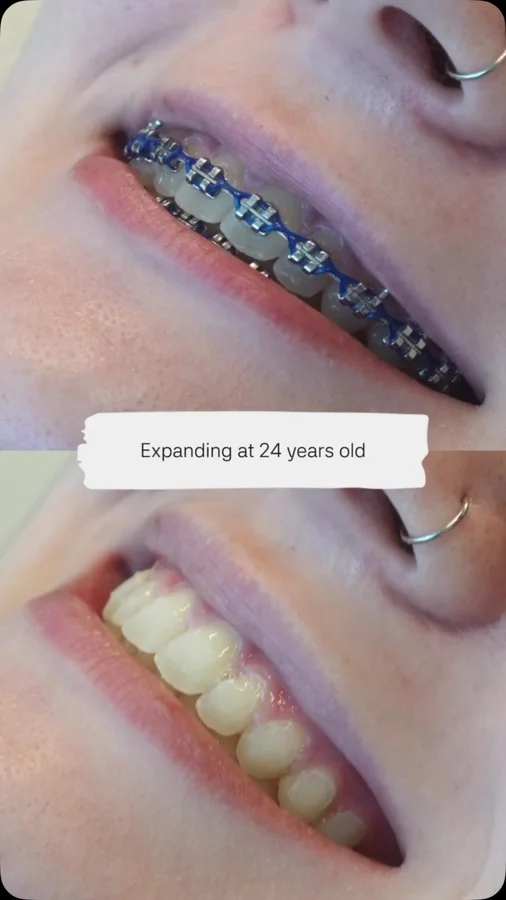

What question did the review investigate?
The post highlights a practical question: can widening the upper jaw change how air moves through the nose? Calvo-Henríquez and colleagues reviewed 12 studies involving 301 children. Their 2020 analysis found reduced nasal resistance and increased airflow after maxillary expansion. The pooled resistance estimate came from nine uncontrolled studies, so the findings need to be understood alongside the studies' design limitations.
These measurements describe nasal breathing physiology. They give clinicians useful information about an effect beyond tooth alignment, while leaving a separate question to answer: whether that effect is relevant to the particular child sitting in the consultation room.
Airflow and sleep quality are different outcomes
A study can show a change in nasal dimensions without establishing that obstructive sleep apnea has resolved. A later randomized comparison of expansion appliances measured sleep outcomes directly and did not find a statistically significant improvement in apnea-hypopnea index at three months. That distinction matters when reading headlines about airway orthodontics.
Ask what the study actually measured: the width of a structure, airflow while awake, a symptom questionnaire, or breathing events during sleep. Each can contribute to understanding a patient, but they are not interchangeable. Strong clinical communication connects a treatment recommendation to the outcome it is intended to improve.
Match the evidence to the patient
The relevant decision is not whether expansion is generally good for breathing. It is whether this child has an upper-jaw finding that calls for expansion, and how that finding fits with the rest of the assessment. A parent can ask the orthodontist to identify the concern on the examination or records and explain the proposed endpoint in plain language.
It also helps to separate the reasons for seeking care. A family worried about a crossbite may have different immediate priorities from a family reporting frequent snoring. When both are present, the care plan should address both questions rather than assuming one measurement answers everything.
Turn research into a useful consultation
Bring a short description of the breathing concern, when it occurs, and what you hope treatment will change. Ask which findings support expansion and which concerns might need another clinician's assessment. Request a clear explanation of how dental progress and breathing concerns will be followed over time.
The strongest takeaway from the post is a thoughtful one: expansion can have meaningful effects beyond a wider dental arch, and research helps define where those effects may matter. An online airway evaluation can organize your observations before a visit; the clinical conversation then connects those observations to appropriate records, examination, and next steps.
Nasal resistance, nasal volume, and sleep outcomes are different variables
Rhinomanometry evaluates the relationship between nasal pressure and airflow, whereas acoustic rhinometry estimates cross-sectional areas and volume. Anatomical imaging evaluates structural dimensions. Sleep studies evaluate respiratory behavior during sleep. An intervention can influence one of these domains without producing a proportional change in the others, particularly when obstruction or sleep instability has more than one contributor.
The Calvo-Henriquez review is relevant to the nasal-breathing question because it examined functional nasal measurements after maxillary expansion. When discussing its clinical implications, identify the specific variable studied instead of using “airway improvement” as an undifferentiated endpoint. For example, a finding about nasal resistance should not be rewritten as proof of normalized oxygenation, restored sleep architecture, or elimination of apnea. Those claims require the corresponding measurements in the relevant patient population.
Sources: [1]
How study design changes the strength of the conclusion
A systematic review organizes existing studies, but its certainty remains constrained by the designs and quality of those studies. Pooling uncontrolled before-and-after observations does not create an untreated comparison group. Differences in age, baseline nasal disease, expansion method, and measurement timing may also affect how well the pooled result applies to a particular patient.
The useful clinical response is to define an individualized objective and the method of reassessment. If the concern is persistent nasal obstruction, medical evaluation can consider soft-tissue and inflammatory contributors alongside the dentofacial findings. If the concern is sleep apnea, nasal comfort alone is not a sufficient endpoint. Reading the review together with a trial that measured sleep outcomes helps explain why structural treatment may have a role in selected patients while still requiring a separate evaluation of respiratory symptoms and sleep physiology.
Bring the conversation to your visit.
- Which finding makes expansion appropriate for my child?
- Are we tracking dental width, nasal symptoms, sleep outcomes, or more than one goal?
- How will the plan change if the bite improves but breathing concerns remain?
Supporting studies & resources
These resources add clinical context to the original post. Each publication should be read with its study population, methods, and outcomes in mind.
- The role of pediatric maxillary expansion on nasal breathing. A systematic review and metanalysis. Calvo-Henriquez et al. · International Journal of Pediatric Otorhinolaryngology · 2020 · Systematic review and meta-analysis
- Polygraphic evaluation of the effects of different rapid maxillary expansion appliances on sleep quality: A randomized clinical trial Gokce et al. · Sleep and Breathing · 2023 · Randomized trial