An evaluation and treatment are different decisions
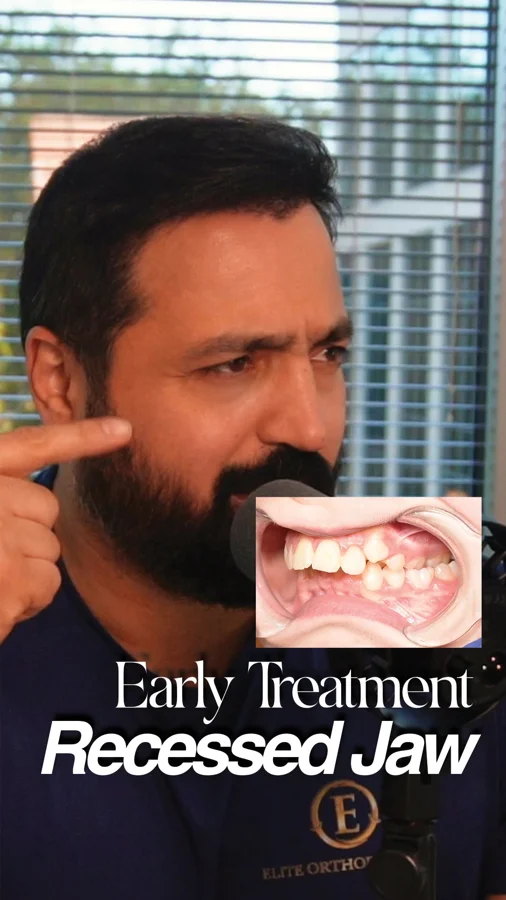
The post responds to familiar advice: wait until all the baby teeth have fallen out. That approach can miss a useful opportunity to understand a developing bite. The American Association of Orthodontists recommends a first orthodontic checkup when a problem is noticed and no later than age seven. The recommendation is for assessment, not automatic braces.
For a family, the distinction changes the purpose of the visit. You are gathering information about development and timing. The consultation should help you understand what is happening now, what may need attention later, and whether any finding would benefit from a specific early intervention.
Growth gives the examination context
Baby teeth do not prevent an orthodontist from assessing the relationship of the teeth and jaws. AAPD guidance considers examination findings and records across stages of dental development, including bite discrepancies, arch space, and oral habits. The relevant question is how the findings fit the child's stage of development.
Ask the clinician to explain the concern using the examination or available records. What makes it important now? What might change if it is monitored? Clear answers are more useful than a broad statement that every child should start early. Timing should be linked to a defined problem and an understandable treatment goal.
Monitoring can be a purposeful plan
The AAO describes several possible outcomes of an early visit, including no anticipated treatment, periodic monitoring, or care for a problem that lends itself to early correction. Monitoring is therefore a legitimate result of an evaluation. It allows decisions to follow development rather than a preset treatment schedule.
If observation is recommended, ask when the child should return and what the next visit will assess. If treatment is recommended, ask what that phase is intended to accomplish and what may still be considered later. Families deserve to understand the difference between completing one phase and completing every possible future orthodontic need.
Include breathing concerns without assuming a diagnosis
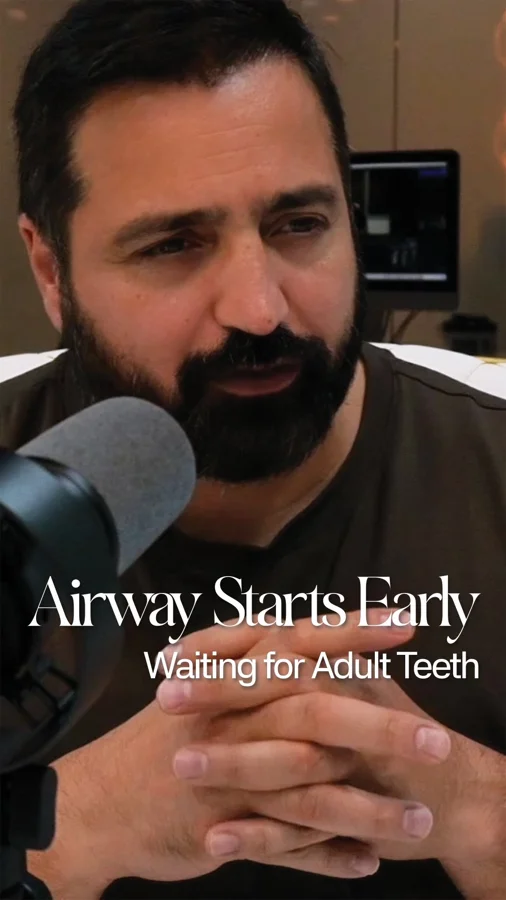
The caption also encourages families to mention mouth breathing or snoring. Bring those concerns to the visit along with questions about the bite. They add relevant history, but neither an age-seven checkup nor a narrow arch alone establishes a sleep-apnea diagnosis. The team should explain whether another assessment is appropriate.
To prepare, write down your main concerns and any prior dental recommendations. Ask for a practical summary of the findings, the suggested timing, and the next review. The goal is a clear plan that fits the child—not pressure to begin treatment simply because an evaluation has taken place.
Mixed dentition is an opportunity to characterize the developing occlusion
The presence of primary teeth does not prevent an orthodontic assessment. During mixed dentition, the clinician can evaluate eruption sequence, available arch space, transverse relationships, anterior-posterior discrepancies, and whether the mandible shifts to achieve occlusal contact. These observations help distinguish a developing problem from a variation that can be monitored.
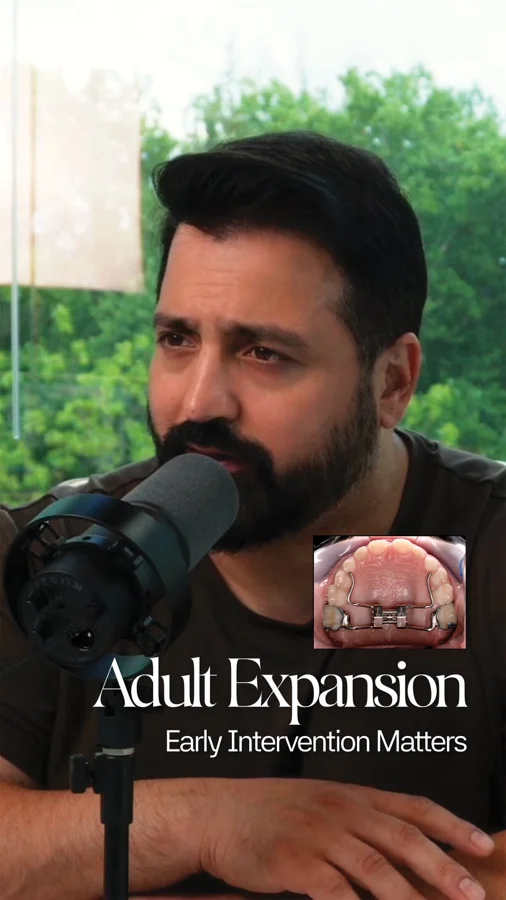
The rationale for an early examination is diagnostic timing, not a commitment to immediate appliance treatment. A complete problem list may identify a concern that benefits from intervention, a concern better addressed later, or no current treatment need. This distinction is particularly important when an early visit is framed around airway awareness. Asking about breathing and sleep can improve the history, but it does not transform every mixed-dentition finding into an airway disorder or make expansion appropriate for every child.
An interceptive plan should specify what waiting would change
When early treatment is recommended, the explanation should identify the current problem, the reason for the proposed timing, and the objective that can be assessed after the first phase. The discussion should also describe whether further orthodontic treatment is expected after additional permanent teeth erupt. Without these details, “early is better” is too broad to guide an informed decision.
Monitoring is also an active clinical plan when it specifies which findings will be reviewed and what change would prompt intervention. A crossbite, eruption concern, and sleep complaint may have different review priorities and require different clinicians. Families should understand those distinctions instead of expecting one appliance to resolve all concerns. The purpose of coordinated assessment is to match the timing and method of care to a documented developmental or functional need, with medical sleep evaluation included when indicated.
Bring the conversation to your visit.
- Is there a specific finding that benefits from attention at this stage of growth?
- If we monitor, what will the next review assess and when should it occur?
- What would an early phase accomplish, and what might still be needed later?
Supporting studies & resources
These resources add clinical context to the original post. Each publication should be read with its study population, methods, and outcomes in mind.
- What Are the Benefits of Early Orthodontic Treatment? American Association of Orthodontists · 2026 · Patient education
- Management of the Developing Dentition and Occlusion in Pediatric Dentistry American Academy of Pediatric Dentistry · 2024 · Clinical best practice
- Policy on Obstructive Sleep Apnea (OSA) American Academy of Pediatric Dentistry · 2026 · Professional policy