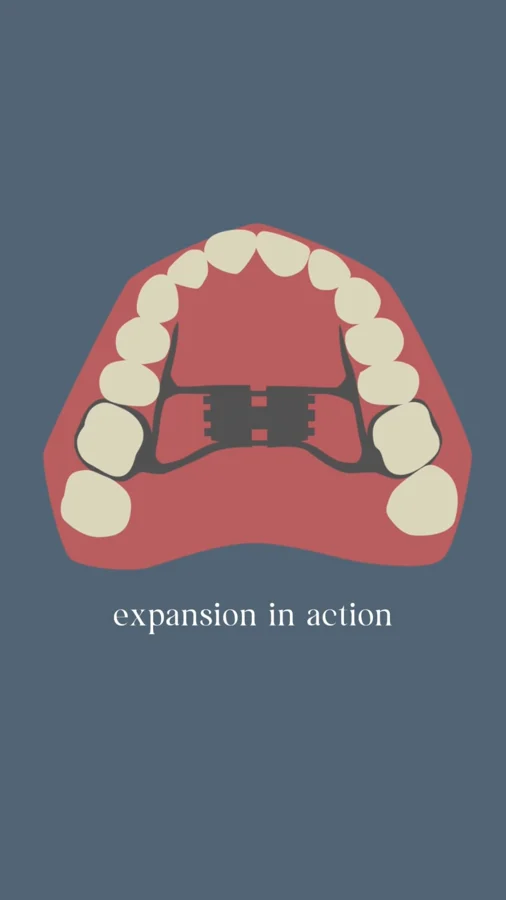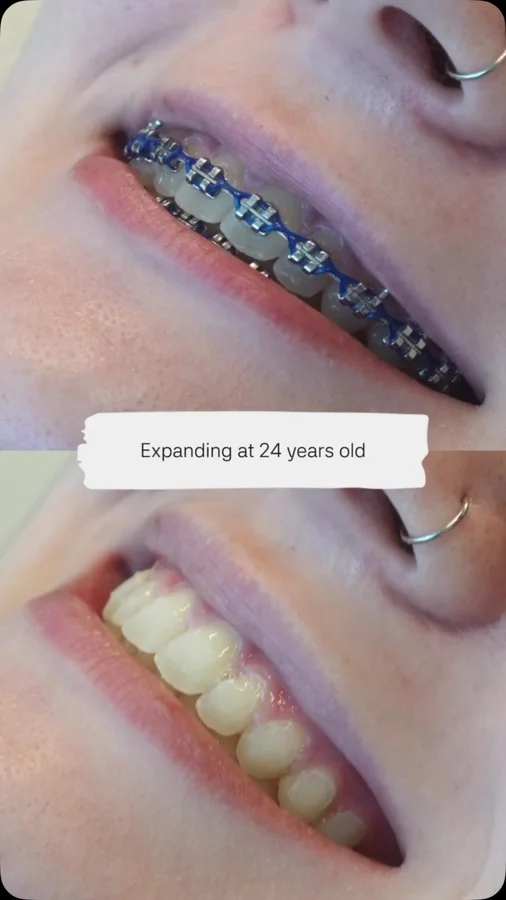
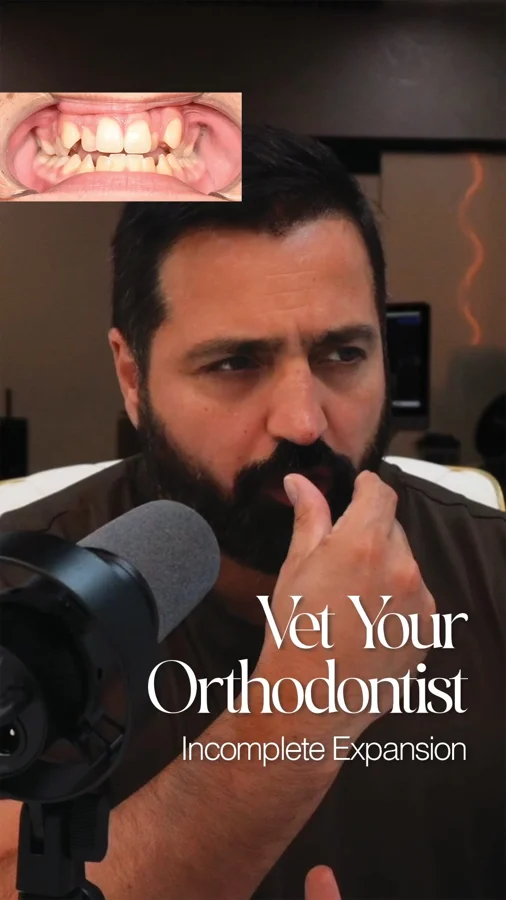
What this post establishes—and what it leaves open
The post describes a patient who had undergone Phase I orthodontic treatment but still had a very narrow upper arch. Its message is that wearing an appliance does not necessarily establish that the intended amount of expansion was achieved. That is a useful reason to ask about treatment endpoints.
The published caption does not include measurements, the original plan, or the full sequence of care. Those missing details matter. The case should prompt questions about assessing a result, not a conclusion that every similar-looking patient needs another expander or that a previous clinician's decisions can be judged from a short social post.
Compare the original objective with the current finding
A helpful review begins with two questions: what was the earlier phase intended to achieve, and what is present now? Ask the reviewing orthodontist to explain those separately. The discussion is easier to follow when the relevant earlier records are available and the clinician can show how the current examination supports a recommendation.
AAPD guidance places diagnostic information at the center of treatment priorities and timing. For this situation, that means more than recognizing that the arch looks narrow. The family should understand which finding remains important, how it affects the proposed plan, and what information is still needed before deciding on further care.
Keep additional treatment tied to a defined goal
If additional expansion is proposed, ask what change is being sought and how the endpoint will be identified. Ask about alternatives, the sequence of care, and the plan after active treatment. A recommendation becomes more reviewable when it is expressed as a specific objective rather than a general statement that more expansion is better.
Breathing concerns deserve their own outcome discussion. Research comparing expanders has shown why dental expansion and sleep-apnea improvement cannot simply be treated as the same result. If the patient also has snoring or another airway concern, ask who will evaluate it and how response will be assessed alongside the orthodontic work.
Use a second opinion to clarify the decision
A family seeking another opinion can request available records and a summary of earlier treatment. Bring the questions that matter most: what remains unresolved, what benefit is expected from the next phase, and what happens if the family chooses observation or a different approach. The reviewing clinician should explain the recommendation without relying on criticism of an unseen treatment history.
The post's practical value is to encourage an informed conversation about results. A past appliance is relevant history, while a current plan needs current evidence. Understanding both helps families evaluate the next step on its own merits and ask for clear expectations about progress and follow-up.
Interpret the present arch in relation to the original Phase I objectives
Phase I is a treatment stage, not a description of a single appliance or a guarantee that every later orthodontic need has been eliminated. To interpret a narrow-looking upper arch after that phase, first establish what the original plan was intended to accomplish. Correction of one discrepancy may occur while other developmental or alignment needs remain.
Comparison should use comparable clinical records rather than photographs with different angles or magnification. Relevant questions include whether a posterior crossbite persists, how posterior teeth are inclined, whether the arches coordinate, and which permanent teeth have erupted since the earlier treatment. These details help separate a true residual transverse problem from a visual impression. They also prevent the current appearance from being used, without evidence, to characterize the quality or success of previous care.
Sources: [1]
Plan the next phase around measurable residual findings
A second-phase recommendation should identify the remaining problem and explain how the proposed treatment differs from the earlier intervention. The plan may concern alignment, arch coordination, eruption, or a persistent skeletal discrepancy; those goals should not be collapsed into the nonspecific instruction to “expand more.” Prior appliance and retention history provide important context for that decision.
If the family’s principal concern is ongoing breathing or sleep difficulty, the assessment should revisit that concern directly rather than infer it from arch shape. The cited sleep-outcome trial demonstrates the importance of measuring respiratory outcomes separately from maxillary expansion. Continued symptoms can warrant medical review even when the bite has improved, and a visible arch change cannot confirm that a sleep disorder has resolved. A coherent treatment sequence therefore links each proposed phase to a documented indication and a corresponding follow-up measure.
Bring the conversation to your visit.
- What was the original Phase I objective, and which concern remains today?
- Which current findings support the proposed additional treatment?
- What alternatives and follow-up measures should we consider before deciding?
Supporting studies & resources
These resources add clinical context to the original post. Each publication should be read with its study population, methods, and outcomes in mind.
- Management of the Developing Dentition and Occlusion in Pediatric Dentistry American Academy of Pediatric Dentistry · 2024 · Clinical best practice
- Polygraphic evaluation of the effects of different rapid maxillary expansion appliances on sleep quality: A randomized clinical trial Gokce et al. · Sleep and Breathing · 2023 · Randomized trial