Look for patterns instead of normalizing every symptom
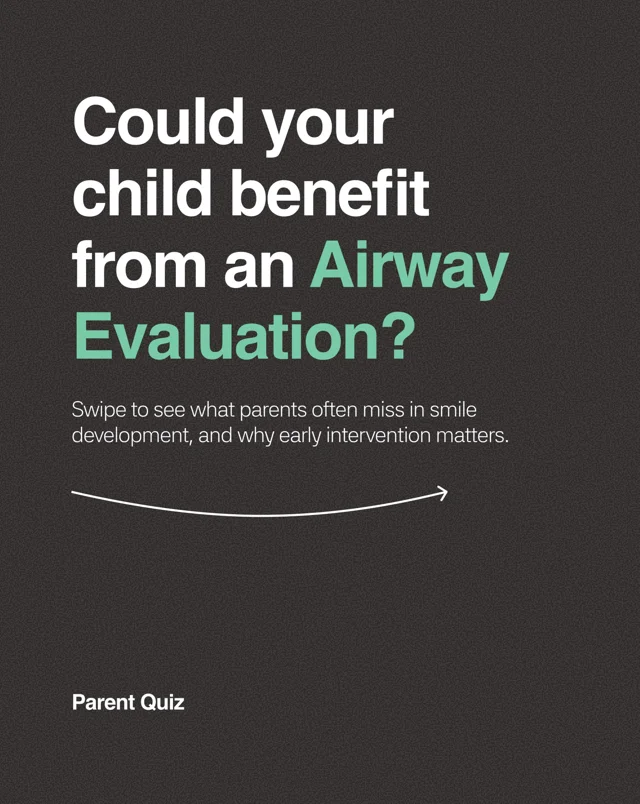
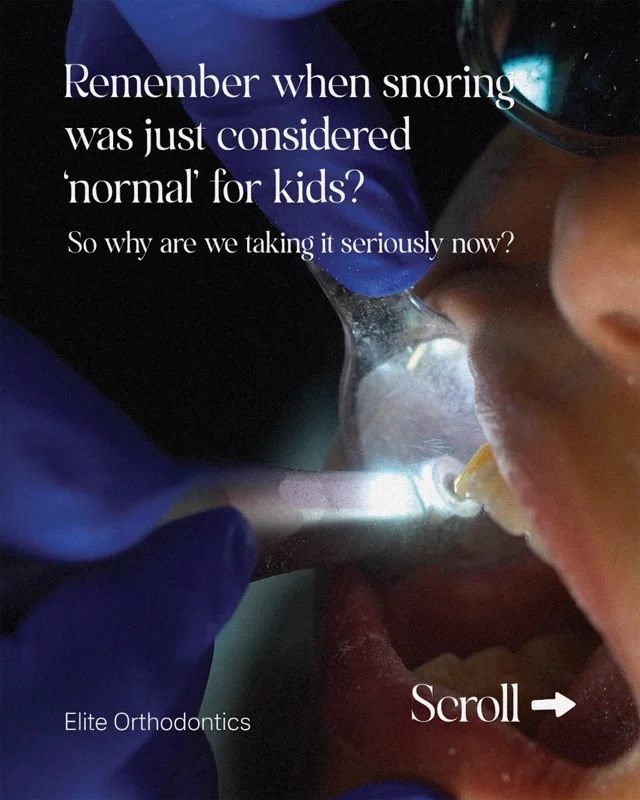
The carousel begins with a familiar situation: a child sleeps with an open mouth, snores, moves around at night, or seems tired. Its central message is to pay attention rather than automatically describing the pattern as simply how that child sleeps. A specific observation gives a clinician something useful to investigate.
Start by describing what happens and how often, instead of deciding on a diagnosis from a social post. A short description of the pattern, its duration, and its effect on daily life helps frame the visit. The question is what those observations mean for this child.
Consider more than one contributor
The slides list enlarged tonsils or adenoids, nasal obstruction, a narrow palate, and jaw development among possible parts of the picture. These are not interchangeable diagnoses. An assessment needs to identify which findings are actually present and whether they help explain the concerns.
The NHLBI’s pediatric sleep-apnea information explains why symptoms and risk factors should be discussed with a healthcare professional. The AAPD also describes the dental team’s role in recognizing potential concerns and supporting referral. Together, these sources support an approach that connects dental observations with appropriate medical evaluation.
Understand what coordinated evaluation adds
An orthodontic visit can assess the developing bite and jaw relationships. A pediatric or ENT evaluation can address medical concerns relevant to the history and examination. Sleep specialists contribute when a sleep disorder is suspected or requires management. The important connection is a shared understanding of the clinical question, rather than a predetermined procedure.
The carousel refers to evaluation during the early mixed-dentition years. This aligns with the value of assessing development while growth is ongoing. An early appointment may lead to treatment, additional evaluation, or a monitoring plan with a defined review interval.
Turn the visual guide into useful preparation
Bring the concerns that are most consistent or disruptive to the visit. Note whether the pattern occurs only during illness or seems persistent, and mention relevant previous evaluations or treatment. Ask which observations belong in the dental plan and which should be discussed with the child’s medical clinician.
The airway evaluation is designed to organize that conversation. It can help a family notice and describe patterns, while the clinical team determines what further assessment is warranted. The aim is a clear next step and a shared plan for reviewing the child’s progress.
Use a visual snoring guide to improve the history, not assign severity
A visual guide can help caregivers recognize a pattern worth describing to a clinician. Its strongest use is to improve the history: how often the child snores, whether the pattern persists outside an illness, whether pauses or recovery breaths occur, and whether daytime function has changed. A checklist does not measure the physiologic burden of sleep-disordered breathing.
The clinical interpretation depends on the complete presentation. Dental findings can contribute information about developing craniofacial relationships, but they do not distinguish primary snoring from OSA on their own. That distinction requires the appropriate medical assessment and, when indicated, sleep testing. The guide should therefore lead to a more accurate conversation about symptoms and referral rather than a conclusion that a particular oral feature explains every observed breathing event.
Integrate the sleep concern with developmental assessment
An orthodontic assessment can identify whether an additional dentofacial problem is present while the medical team evaluates the sleep concern. These parallel questions may influence a coordinated plan, but one examination does not replace the other. The age-seven orthodontic recommendation is a developmental checkpoint, not a diagnostic threshold for OSA and not an instruction to begin expansion in every child who snores.
For follow-up, keep the original symptom description available so that later changes can be compared accurately. An improvement reported by the family matters, but its meaning should be considered alongside the medical diagnosis and any objective reassessment that has been recommended. The same is true if symptoms persist after dental treatment: reassessment should revisit the respiratory concern rather than assume the original orthopedic goal was inadequate. A clinically useful visual resource supports observation, documentation, and appropriate referral.
Bring the conversation to your visit.
- What could be contributing to this pattern?
- Which clinician should evaluate the sleep concerns?
- What is the next step if the symptoms continue?
Supporting studies & resources
These resources add clinical context to the original post. Each publication should be read with its study population, methods, and outcomes in mind.
- Sleep Apnea in Children National Heart, Lung, and Blood Institute · 2025 · Patient education
- Policy on Obstructive Sleep Apnea (OSA) American Academy of Pediatric Dentistry · 2026 · Professional policy
- What Are the Benefits of Early Orthodontic Treatment? American Association of Orthodontists · 2026 · Patient education