Start with what the story actually shares
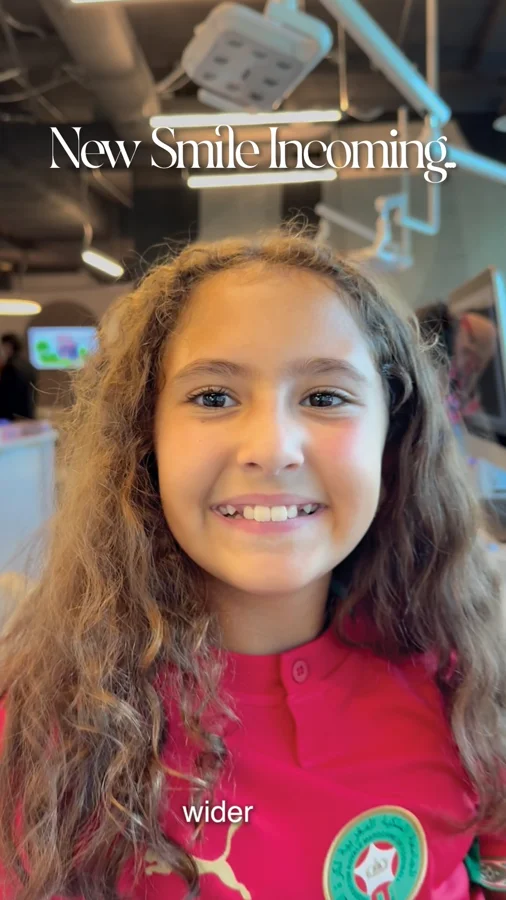
A patient story can make treatment feel more familiar. It gives families a person and a moment to connect with, rather than only a diagram or a list of procedures. This post celebrates participation in a smile journey and the idea of creating space. Its public caption does not provide the details needed to reconstruct a complete clinical case.
That leaves room for useful questions. What was the original concern? What did the patient hope to change? Which treatment options were discussed? These are the details that would help a family understand the decisions behind a visible milestone.
Define the different kinds of progress
Dental alignment, bite relationships, oral function, and sleep symptoms are different aspects of care. A plan can address several of them, but it should explain how progress will be assessed for each one. A smile photograph is meaningful for some dental observations; it cannot show what happens to breathing throughout a night.
If airway concerns are part of your consultation, ask which findings are established and which are still being evaluated. It is reasonable to want both a clear dental goal and a clear explanation of how any breathing-related concern will be followed.
Put personal experience alongside clinical evidence
An individual account can describe priorities, expectations, and the experience of attending treatment. A research study asks a different question: what was observed across a defined group using specified methods? Clinical guidance adds another perspective by bringing evidence and professional judgment into a care framework.
The AAPD’s guidance on developing dentition provides context for evaluating growth and occlusion. Its sleep-apnea policy explains the dental team’s role in recognizing concerns and facilitating medical assessment. Neither source tells us this particular patient’s diagnosis or outcome, and neither should be presented as proof about an individual social post.
Prepare for your own conversation
Use the story as an invitation to ask about the practical side of care. Who explains the plan? How are questions handled between visits? What does follow-up involve? How will the patient’s own priorities be included in decisions? A helpful consultation makes those expectations concrete.
For a child, bring both the parent’s observations and the child’s questions. For an adult, explain the changes you hope to make and any relevant prior treatment. The airway evaluation can organize the starting concerns, while the clinical assessment determines how those concerns relate to your own circumstances.
A personal treatment narrative and a clinical case report answer different questions
A personal story can communicate comfort, motivation, satisfaction, and the experience of receiving care. A clinical case report requires additional information: the presenting diagnosis, baseline records, intervention, follow-up interval, objective outcomes, and relevant limitations. The absence of those details from a social post does not diminish the person’s experience; it limits the conclusions that another viewer can draw from it.
For this post, the educational task is to identify the questions behind the visible change without inventing the answers. Was the principal goal alignment, correction of an occlusal discrepancy, or another documented need? Which treatment stages were involved? Were the records obtained under comparable conditions? These questions establish what would be required to interpret the case clinically, rather than assigning a diagnosis or outcome that the public material does not report.
Sources: [1]
Evaluate patient-reported and objective outcomes side by side
Patient-reported outcomes are important because clinical care should account for the person’s daily function and experience. They nevertheless describe a different domain from a measured change in dental relationships or sleep physiology. A clinically detailed case discussion would present those domains separately and state how each was assessed.
If a narrative includes improved breathing or sleep, the next question is what was documented before and after treatment and whether other interventions occurred during the same interval. A smile photograph cannot establish an apnea–hypopnea index, nasal resistance, or the absence of residual obstruction. For prospective patients, the useful takeaway is to ask for a diagnosis-specific plan and a clear way to evaluate its goals. A successful experience for one person can encourage thoughtful inquiry while still leaving candidacy and expected outcomes to an individualized examination.
Bring the conversation to your visit.
- What goals would matter for my own diagnosis?
- How would dental and breathing outcomes be measured?
- What should our family expect during follow-up?
Supporting studies & resources
These resources add clinical context to the original post. Each publication should be read with its study population, methods, and outcomes in mind.
- Management of the Developing Dentition and Occlusion in Pediatric Dentistry American Academy of Pediatric Dentistry · 2024 · Clinical best practice
- Policy on Obstructive Sleep Apnea (OSA) American Academy of Pediatric Dentistry · 2026 · Professional policy